How to Tell If a Tree Is Dangerous Before It Falls
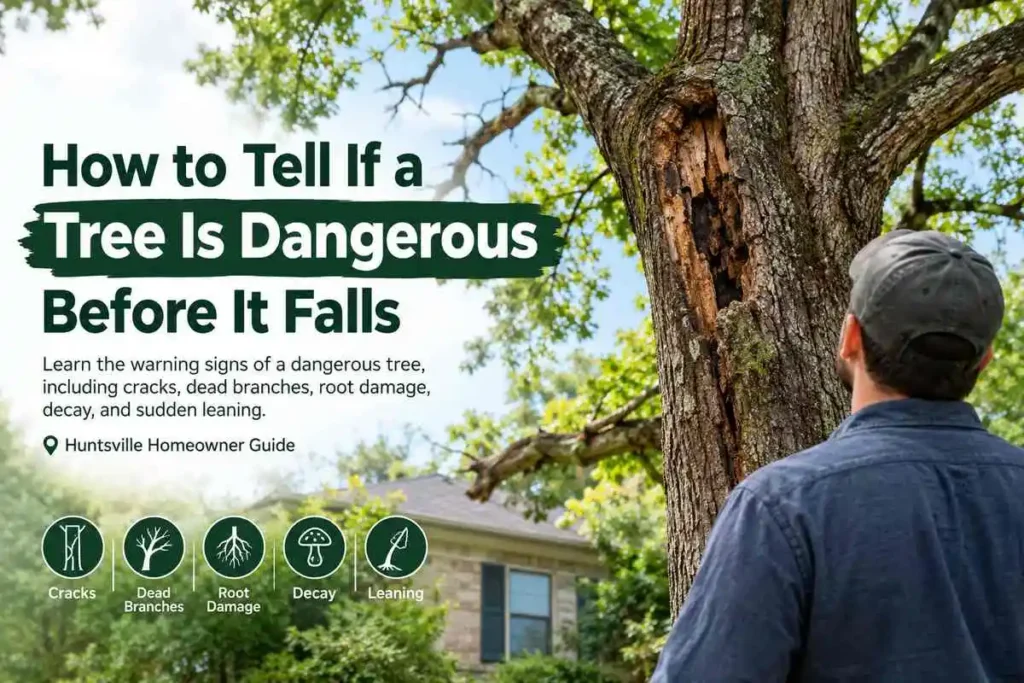
A dangerous tree signs does not always look ready to fall. Problems can develop inside the trunk, around the roots, or high in the canopy before obvious failure occurs.
Cracks, significant leaning, dead or broken branches, root damage, decay, and storm-related structural changes can all indicate that a tree needs closer attention. The location of the tree matters too. A defect becomes more concerning when a failing tree or branch could reach a home, vehicle, driveway, fence, walkway, or other occupied area.
The goal is not to remove every tree with a visible defect. The goal is to identify potential hazards early and determine whether the right response is monitoring, pruning, additional assessment, or removal.
Quick Answer: What Are the Signs of a Dangerous Tree?
Common warning signs include:
- A new or worsening lean
- Large dead or broken branches
- Cracks or splits in the trunk or major limbs
- Exposed, damaged, or disturbed roots
- Soil movement around the base
- Cavities, decay, or fungal growth
- Weak branch unions or multiple stems with poor attachment
- Significant storm damage
- A tree that has changed noticeably in a short period
- A tree positioned where failure could affect a home, vehicle, driveway, fence, walkway, or other frequently used area
One warning sign does not automatically mean a tree must be removed. Tree condition, structural stability, site conditions, and potential targets should all be considered when evaluating risk.
1. The Tree Has Started Leaning
Some trees naturally grow with a slight lean. The more important warning sign is a new or worsening lean.
Pay particular attention when:
- The tree recently changed position
- The lean appeared after a storm
- Soil has lifted or cracked near the base
- Roots are exposed
- The tree is leaning toward a home, driveway, vehicle, or other occupied area
A sudden change in lean can indicate movement within the root system or a structural problem.
Do not try to push, pull, brace, or cut a significantly leaning tree yourself.
2. There Are Cracks or Splits in the Trunk
Cracks in a major stem or trunk can affect structural strength.
Look for:
- Long vertical cracks
- Large splits
- Cracks around major branch unions
- Separation between co-dominant stems
- Cracks that appear to be getting larger
A small surface defect is not necessarily an emergency. However, a significant crack in a major structural part of the tree deserves professional attention, particularly when the tree is positioned over a structure or other target.
3. Large Branches Are Dead or Broken
Dead branches can eventually break, especially when exposed to wind, rain, or other stress.
Pay attention to:
- Large dead limbs
- Broken branches hanging in the canopy
- Branches partially separated from the tree
- Deadwood above roofs, driveways, sidewalks, or play areas
- Large branches that have recently changed position
A suspended or partially broken branch can be particularly hazardous because it may fall unexpectedly.
4. The Roots Are Exposed, Damaged, or Moving
The root system provides much of a tree’s stability. Problems below ground can therefore be just as important as visible damage in the canopy.
Warning signs can include:
- Exposed roots
- Broken or damaged roots
- Soil movement around the root flare
- Soil heaving on one side of the tree
- A sudden lean combined with root disturbance
- Construction or excavation damage near the tree
Root problems can be difficult for a homeowner to evaluate from the surface. If you notice movement around the base or a sudden change in the tree’s position, keep people away from the area and arrange an assessment.
5. You See Cavities, Decay, or Signs of Wood Deterioration
Internal decay is not always visible.
Possible warning signs include:
- Cavities in the trunk
- Visible decay
- Fungal growth or conks
- Unusual cracks or seams
- Soft or deteriorating wood
- Sap coming from damaged areas
- Carpenter ants or other signs associated with deteriorating wood
The absence of visible fungus or a cavity does not prove that the inside of a tree is sound. Some structural problems are hidden.
6. The Tree Has Significant Storm Damage
Storms can create problems that are not immediately obvious.
After severe weather, inspect from a safe distance for:
- Broken major limbs
- Split stems
- New leaning
- Exposed roots
- Lifted soil
- Hanging branches
- Damaged branch unions
- Trees resting against structures
A storm-damaged tree can also place additional stress on nearby trees.
If a tree or branch is touching a power line, stay away and contact the appropriate utility provider. Do not attempt to cut or move it yourself.
7. The Tree Has Multiple Stems With a Weak Union
Some trees develop multiple stems emerging from the same area of the trunk.
Where stems form a narrow or weak union, the connection can become a structural concern, particularly as the stems increase in size.
Look for:
- Two or more large stems emerging from the same point
- Narrow branch unions
- Included bark
- Cracks at major unions
- Separation between stems
This does not automatically mean the tree should be removed. It means the structure deserves closer evaluation.
8. The Canopy Is Changing
Changes in the crown can provide additional clues about tree health or structural problems.
Watch for:
- Large areas of dead branches
- Sudden loss of foliage
- Significant dieback
- An unusually uneven canopy
- Broken branches concentrated on one side
- Major changes following storms or construction
Canopy symptoms have many possible causes, so they should be considered together with the trunk, roots, species, site conditions, and surrounding environment.
| Warning Sign | Potential Concern | Recommended Response |
|---|---|---|
| Sudden lean | Possible instability | Keep people away and arrange an assessment |
| Exposed or disturbed roots | Reduced stability | Professional evaluation |
| Major trunk crack | Structural weakness | Professional evaluation |
| Large hanging limb | Falling-branch hazard | Keep clear and arrange professional help |
| Severe storm damage | Hidden structural damage | Assessment before cleanup |
| Dead tree near a structure | Potential impact risk | Evaluate removal options |
| Minor deadwood away from targets | Lower immediate concern | Routine tree care may be appropriate |
| Natural slight lean with no other defects | May be stable | Monitor or assess if uncertain |
The important distinction is between a visible defect and the risk created by that defect. Alabama Cooperative Extension guidance emphasizes evaluating the likelihood of failure, the condition of the tree, environmental factors, and potential targets such as people or property.
Does a Dangerous Tree Always Need to Be Removed?
No.
Some trees with defects can remain in place with appropriate pruning, monitoring, or other management.
Removal becomes more relevant when a tree has significant structural problems and the potential consequences of failure are serious.
For example, a large dead tree in an isolated part of the backyard presents a different situation from a similarly damaged tree standing directly beside a home, driveway, or frequently used walkway.
The right decision depends on:
- Tree condition
- Structural defects
- Likelihood of failure
- Size of the affected part
- Location
- Nearby targets
- Occupancy of the area
- Potential consequences of failure
The objective should be risk management, not automatic removal.
If removal is determined to be the appropriate solution, our [tree removal service] page explains the different situations that may require professional removal and what the process involves.
What Should You Do If You Think a Tree Is Dangerous?
Keep People Away
Move people, children, and pets away from the potential fall area.
Do not stand beneath damaged branches or near a tree that has recently shifted.
Do Not Climb the Tree
Climbing a damaged tree can expose you to falling limbs and unstable structures.
Do Not Cut a Damaged Tree Yourself
Storm-damaged and leaning trees can behave unpredictably because branches and trunks may be under tension.
Professional equipment and an appropriate removal plan may be necessary.
Watch for Utility Lines
Trees and electrical lines create a particularly serious hazard.
If a tree is touching or has fallen onto a power line, stay away and contact the utility provider. Do not attempt to cut, move, or pull the tree away from the line.
Document What You See
Photos taken from a safe location can help document:
- Leaning
- Cracks
- Broken branches
- Root disturbance
- Storm damage
- The tree’s proximity to structures
Do not approach an unstable tree just to get a closer photograph.
When Should You Call a Tree Professional?
Consider arranging a professional assessment when:
- The tree has suddenly started leaning
- A major trunk or branch is cracked
- Large branches are hanging or broken
- Roots have been damaged or the soil has shifted
- The tree suffered significant storm damage
- The tree is dead and located near a structure
- You see signs of substantial decay
- You are unsure whether the tree should be pruned or removed
A professional assessment can help determine whether the appropriate solution is pruning, monitoring, additional evaluation, or removal.
What Does a Professional Tree Assessment Look At?
A proper assessment goes beyond simply looking at the tree from the street.
Important considerations can include:
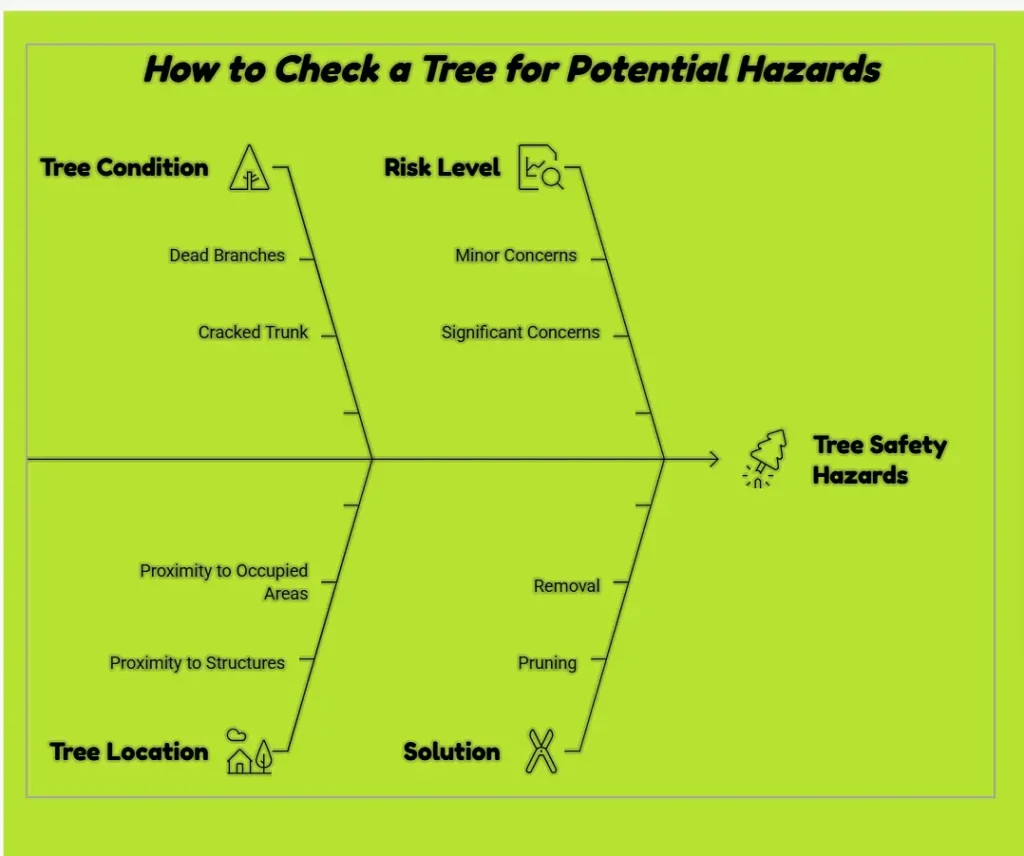
1.Tree condition — trunk, branches, roots, and canopy
2.Structural defects — cracks, weak unions, decay, and other weaknesses
3.Site conditions — soil, slope, construction, and surrounding environment
4.Tree location — what the tree or branches could reach if they fail
5.Occupancy — how frequently people or vehicles are present
6.Potential consequences — property damage, injury, blocked access, or utility disruption
7.Available options — pruning, mitigation, monitoring, or removal
Alabama Cooperative Extension describes different levels of tree risk assessment, ranging from limited visual inspection to more detailed evaluations when conditions require additional investigation.
Dangerous Trees in Huntsville: Why Location Matters
Huntsville properties can have trees positioned close to homes, garages, fences, driveways, streets, utility lines, and other targets.
That means the same tree defect can have very different consequences depending on where the tree stands.
For example:
Tree A: A damaged branch over an unused area of the backyard.
Tree B: A similar damaged branch directly above a driveway used several times every day.
The structural problem may be similar, but the potential target is different.
That is why tree safety should be considered in the context of both tree condition and property use.
Tree Removal or Tree Trimming?
Not every problematic tree needs complete removal.
| Situation | Possible Service |
|---|---|
| Small dead branches | Tree trimming and pruning |
| Overgrown limbs | Tree trimming and pruning |
| One damaged branch | Targeted pruning |
| Large hanging limb | Professional assessment |
| Significant trunk damage | Removal may be appropriate |
| Major root failure | Professional assessment |
| Dead tree near a structure | Removal may be appropriate |
| Severely unstable tree | Removal may be appropriate |
The correct solution should address the actual problem rather than removing a tree simply because it has one visible defect.
A Simple Tree Safety Check
When Tree Problems Become an Emergency
Some situations should not wait for routine tree care.
Seek urgent professional help when a tree:
- Has fallen onto a home or vehicle
- Is blocking an important access route
- Has a large unstable limb hanging overhead
- Has suddenly uprooted or shifted
- Has split significantly during a storm
- Is creating an immediate threat to people or property
If electrical lines are involved, keep away from the area and contact the appropriate utility provider.
For urgent situations, contact our [emergency tree service] team.
Frequently Asked Questions
Look for sudden leaning, major cracks, large dead or broken branches, exposed or damaged roots, soil movement, decay, weak branch unions, and significant storm damage. The tree’s location and what could be hit if it fails also matter.
No. Some trees naturally lean and can remain stable. A new or worsening lean, especially when combined with root movement, exposed roots, or storm damage, deserves professional attention.
Yes. Some structural problems and internal decay are difficult to see from the outside. Visible symptoms should be considered together with the tree’s structure, site conditions, and potential targets.
Not necessarily. Small amounts of deadwood may be handled through appropriate pruning. Large dead branches, extensive dieback, or deadwood positioned over people or property should receive closer attention.
Keep people away from the affected area and avoid climbing or cutting the tree yourself. Look for broken limbs, sudden leaning, root disturbance, and contact with utility lines. If the damage creates a potential hazard, arrange a professional assessment.
Need Help With a Potentially Dangerous Tree?
A tree with warning signs does not automatically need to come down. The important first step is understanding the actual condition, the surrounding property, and the potential consequences if the tree or a major part of it fails.
If you are dealing with a leaning tree, damaged trunk, dead tree, storm damage, unstable branch, or another tree safety concern in Huntsville, start with an assessment of the actual situation.
Get Your Tree Removal Assessment
Call for Tree Service
Need Help With a Potentially Dangerous Tree?
A tree with warning signs does not automatically need to come down. The important first step is understanding the actual condition, the surrounding property, and the potential consequences if the tree or a major part of it fails.
If you are dealing with a leaning tree, damaged trunk, dead tree, storm damage, unstable branch, or another tree safety concern in Huntsville, start with an assessment of the actual situation.