

What to Do After a Tree Falls on Your House
A tree fell on your house and the first priority is safety—not cleanup.
A fallen tree can damage the roof, walls, windows, electrical system, vehicles, or other parts of the property. The tree may also remain unstable, with broken branches, tensioned limbs, or damaged roots creating additional hazards.
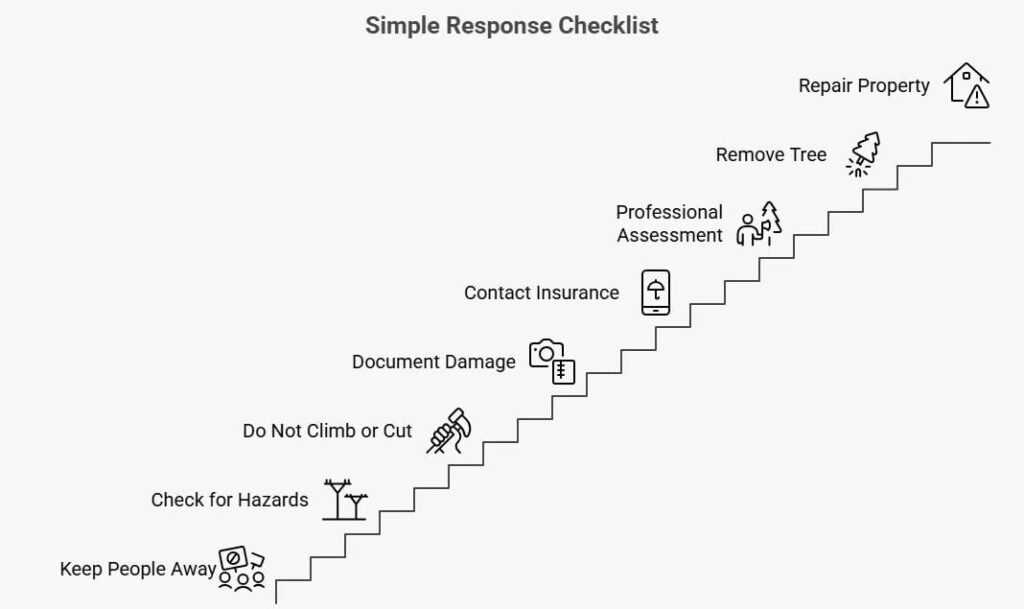
Keep people away from the affected area and assess the situation from a safe location before attempting to move anything.
Immediate Safety Comes First
Before worrying about cleanup or repairs, make sure people are away from the affected area.
Move People Away
Keep children, pets, visitors, and other occupants away from the damaged area.
Do not stand beneath damaged branches or near a tree that is leaning, suspended, or resting against another structure.
If the tree has damaged an occupied part of the house, move to a safer area if you can do so without passing through the hazard zone.
Check for Electrical Hazards
Power lines can be difficult to see after severe weather, particularly when they are mixed with branches and debris.
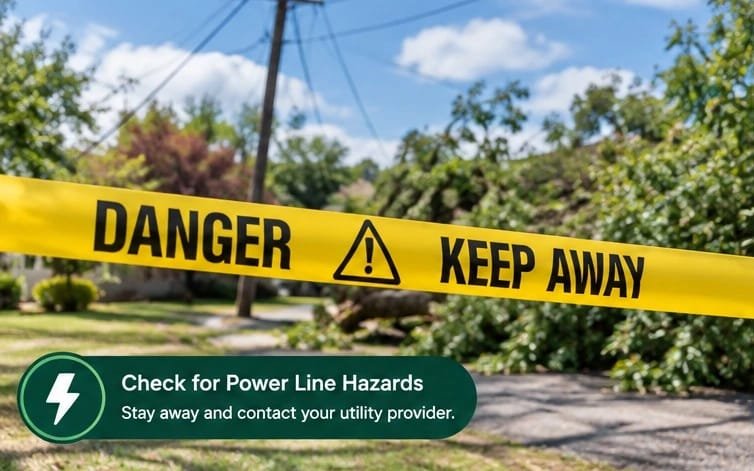
Treat fallen electrical lines as live. Do not touch the tree, branches, wires, or anything in contact with them.
The Alabama Cooperative Extension System advises homeowners not to approach or remove trees touching utility lines and to treat fallen power lines as energized. Alabama Cooperative Extension System — Post-Storm Landscape Safety
If electrical lines are involved, stay away and contact the appropriate utility or emergency service.
Do Not Climb Onto the Roof
A tree can hide roof damage that is not immediately visible.
Branches may shift when weight is removed, while damaged roofing or structural components may not be stable.
Do not climb onto the roof simply to inspect or remove branches after a tree impact.
Do Not Start Cutting the Tree
A fallen tree is not necessarily safe simply because it is already on the ground.
Branches and sections of the trunk can be under tension. A tree resting against a structure can also shift when weight is removed.
Leave difficult or unstable removal work to professionals.
Is a Tree on Your House an Emergency?
A fallen tree should be treated as an urgent situation when it has damaged or may further damage people, the structure, utilities, vehicles, or areas that people regularly use.
Examples include:
- A tree through the roof
- A large branch penetrating a structure
- A tree resting against the house
- A tree blocking a primary entrance
- A tree affecting electrical equipment
- A fallen tree near power lines
- A partially attached tree or branch still hanging above the property
- A damaged tree creating an immediate risk of additional failure
Not every fallen branch requires emergency removal. The level of urgency depends on what has been damaged and what hazards remain.
If the tree has not fallen but you are concerned about its stability after a storm, review these dangerous tree signs before deciding what action may be needed.
Roof and Structural Damage
If a tree has struck your house, do not assume the visible damage tells the whole story.
From a safe location, look for signs such as:
- Damaged roofing
- Broken windows
- Damaged siding
- Visible structural damage
- Water entering the building
- Damaged gutters
- A tree or branch pressing against the structure
- Electrical components that may have been affected
If the building appears unstable or there is an immediate threat to people, leave the affected area and contact the appropriate emergency service.
Tree removal and building repairs are separate parts of the response. A tree service may handle the fallen tree while roofing, structural, electrical, or other repairs require separate professionals.
Handling a Tree Resting on the House
A tree resting on a roof, wall, fence, or other structure can remain unstable even when it appears motionless.
The removal approach may depend on:
- Tree size
- Trunk position
- Remaining branch weight
- Structural damage
- Access around the property
- Nearby utility lines
- Building condition
- Direction of remaining pressure
The objective is not simply to cut the tree into pieces. The removal plan needs to account for how the tree and damaged structure may respond as weight is removed.
Do not pull the tree away from the building with a vehicle or attempt to remove large sections without understanding the hazards involved.
Documenting the Damage
When it is safe to do so, take photographs of the damage before cleanup begins.
Useful photos may include:
- The entire fallen tree
- The point where it contacted the house
- Roof or exterior damage
- Broken branches
- The trunk and base
- Nearby fences or vehicles
- Utility lines from a safe distance
- Other visible property damage
Take photographs without entering an unsafe area or touching damaged electrical equipment.
These records can help when communicating with your insurance company and tree service provider.
If the fallen tree has caused property damage, contact your insurance company and follow its instructions for documenting and reporting the loss.
Coverage depends on the specific policy and circumstances, so do not assume that every type of tree damage will be handled the same way.
Keep records of:
- Photos and videos
- Visible property damage
- Professional estimates
- Cleanup-related documentation
- Communications with your insurer
- Emergency work performed
Do not base your expectations about coverage solely on another homeowner’s experience.
Can a Fallen Tree Be Saved?
Sometimes a damaged tree can remain viable after storm damage, but a tree that has fallen onto a house presents a different situation from a tree with limited branch damage.
The condition of the roots, trunk, major branches, and remaining structure all matter.
Do not assume that a damaged tree can simply be stood back up or preserved because some foliage remains.
A professional assessment can help determine whether preservation is realistic or whether removal is necessary.
If you are dealing with a damaged but still-standing tree, see our guide on whether a tree should be removed or saved.
Professional Tree Removal After a House Impact
The exact process depends on the site, but professional removal generally starts with understanding the condition of the tree and surrounding hazards.
1. Assess the Site
The tree, damaged structure, access, nearby property, and remaining hazards are considered.
2. Plan the Removal
The removal approach should account for where the tree is resting and how sections can be controlled safely.
3. Remove the Tree
A tree resting on a structure may need to be dismantled in sections rather than moved as one piece.
4. Clear the Debris
Branches, trunk sections, and other resulting debris are handled according to the agreed scope.
5. Address the Stump
Stump grinding or removal is a separate consideration and should be confirmed as part of the project scope.
If you need help with the removal itself, see our tree removal service in Huntsville. Before approving the work, you can also review what should be included in a tree removal estimate so you understand the expected scope, cleanup, stump work, and other project details.
What to Tell a Tree Service
Give the tree service as much useful information as you can without entering the hazard area.
You can mention:
- Where the tree landed
- Approximate tree size
- Whether it struck the roof or another structure
- Whether power lines are involved
- Whether anyone is injured
- Whether the tree is still partially attached
- Whether access is blocked
- Whether the incident occurred during a storm
- Whether you have photos taken from a safe location
If the situation involves immediate danger to people, electrical hazards, fire, or severe structural instability, contact the appropriate emergency service first.
When Emergency Tree Help Is Appropriate
Urgent professional help may be appropriate when a fallen or damaged tree:
- Has struck a house
- Is resting on a roof
- Is blocking a critical access point
- Is hanging above an occupied area
- Is touching power lines
- Has a large suspended limb
- Is partially uprooted and still standing
- Has shifted onto another structure
- Creates an immediate hazard to people or property
For situations involving a fallen or unstable tree that require urgent attention, see our emergency tree service page.
What to Avoid After a Tree Falls
After a tree falls on a house, avoid:
- Cutting the trunk without understanding the forces involved
- Removing branches from power lines
- Climbing onto a damaged roof
- Standing beneath suspended branches
- Pulling the tree with a vehicle
- Moving large sections of the trunk without proper equipment
- Allowing children or pets near the work area
- Assuming the tree is safe because it has already fallen
Storm-damaged trees can contain hidden tension and unstable sections. When in doubt, keep people away from the hazard and arrange an appropriate professional assessment.
Huntsville Storm Damage Considerations
Huntsville properties can have very different layouts, from established residential yards to properties with fences, driveways, mature trees, and nearby structures.
After severe weather, the location of the fallen tree matters alongside its size and condition.
A fallen tree may block:
- A driveway
- A walkway
- A garage
- A roof
- A fence
- A yard
- A business access area
Storm damage can also leave additional trees or branches unstable.
If one tree has fallen, do not assume nearby trees are unaffected.
Frequently Asked Questions
Move people away from the affected area, stay clear of power lines, avoid climbing onto the roof or cutting the tree, document visible damage when safe, and arrange appropriate professional help.
Do not attempt to cut it unless the site has been assessed as safe and you have the appropriate professional capability. A tree on a structure may be under tension or supporting damaged components.
Stay away from the tree and line. Do not touch or move the tree or branches. Treat fallen power lines as live and contact the appropriate utility or emergency service.
No. Tree removal and building repairs are separate scopes of work unless specifically agreed otherwise.